Simon ALLEN : The New Mastersounds
If you want to write a comment about this interview, go there !

Simon gives you this New Mastesounds's title :
Jack McDuff's 'Butter for Yo Popcorn'
Tob : Simon Allen, who are you? Can you introduce yourself to the French public and in particular our drummer’s colleagues? Where are you from? What are your passions? And your career? (for girls: size, eyes, hair’s colours, are you single?)
Simon :
Tob : What is your musical background? What’s lead you to play drums?
Simon : I played piano at home from the age of 8. I played keyboards in covers band with schoolfriends when I was a teenager and I started to take an interest in the drums during that time.
Tob : How did you learn? (Course, trainer or self-taught?) At present, do you work regularly your instrument? If yes, what do you work in particular?
Simon : I’m almost entirely self-taught, and I really learned how to play at the expense of early audiences. (I was not ashamed to play in public way before I was proficient!) I had a few lessons when I was at college in 1993 from a drummer who used to tour with Wham! He liked my own personal style and feel, and didn’t try to change my maverick technique, but gave me very useful advice about dynamics and up-beat / down-beat emphasis. His affirmation gave me the confidence to call myself a drummer.
I’ve never been able to practice alone for very long - the instrument doesn’t make any sense to me without a bass player. However, I can make myself practice if I have a specific goal. For example, when we found out we had some gigs with Lou Donaldson (in 2004), I worked hard for 2 months on the souljazz grooves (mainly by listening and playing along to Leo / Idris on the original records). It really made a difference to my playing. More recently, we did a James Brown Tribute set at Saint Paul Soul Jazz, and again, I put a lot of work into analyzing and absorbing the original grooves, and playing along to the CDs. If you listen carefully (on headphones) to that JB material there are a lot of surprises. Sometimes it’s difficult to pick out exactly what the kit is doing because of the way the recordings were produced.
Tob : Do you play other instruments?
Simon : A little piano, late at night, if I’ve been drinking, as long as Eddie Roberts isn’t around. He hates my ham-fisted attempts at Elton John and Billy Joel songs.
Tob : What advises could you give to a novice drummer? Do you have a special advice to « groove » like you know to do it?
Simon : I don’t think you can teach ‘groove’ – it comes from years of absorbing other music, and it comes from the synergy between musicians. Pete Shand (bass player) and I are still trying to understand how it works!
But I could advise a less-experienced drummer on basic ‘musicianship’ , for example, knowing how and when to leave space for the other musicians, and how to play dynamically (i.e. getting the volume right, building up, breaking down, etc…) A groove for me is an organic thing. Sometimes it works amazingly and sometimes it’s not quite right, but it’s not always predictable!
Tob : You play with Eddie Roberts since 1997, if I’m not wrong, did you play with other groups, in different styles?
Simon : Correct – prior to that, my style was cleaner, more precise, less ‘earthy’. I was influenced by contemporary jazz-funk e.g. Incognito, and bands like Steely Dan, as well as the mid-70’s funk sound of Tower of Power and Headhunters. I had an 8-piece band called ‘Elevator’ which at one time featured vocalist John McCallum (who can be heard on the recent Haggis Horns single ‘Hot Damn!’). When I was younger I also played in a soul band called Eden and a band called Man Alive! Which was more ‘acid jazz’, à la Brand New Heavies. None of those bands ever released any records, but it was a good learning experience and we played quite a few gigs in and around Leeds, and rehearsed a lot, developing the arrangements.
Tob : What are your musical influences?
Simon : See above, plus Eddie got me listening to the original Blue-Note guys – Idris, Grady Tate, et alia. The way I play now is more influenced by Eddie and Pete than any other drummer.
Tob : Who are the drummers you particularly appreciate? Who is your ultimate reference?
Simon : I recently played in New Orleans and Adam Deitch, who I hadn’t heard of at the time, came up to sit in – he blew me away, so I looked him up on the internet afterwards – he has a very impressive musical career. I don’t know who my ultimate reference is though.
Tob : Could you define the “Simon Allen’s style”?
Simon : Not really, but when I’m doing my job right, most of the following adjectives should apply to my playing:
energetic, dynamic, old-school, gritty, fun, tight, attentive, enthusiastic, tasteful, excitable, unorthodox.
Tob : Simon, you play as a left hander with a "right hander game". You are really a left hander or you work hit hat game with the left hand / snare with the right hand? What are advantages and disadvantages of such game?
Simon : Aha – I don’t know the answer to that as I’ve never played it the other way! I guess it’s harder to roll smoothly around the toms when you lead with the left hand, but maybe it’s easier to do all that snare ghosting with the open-handed style. The advantage to me was that I learned initially by playing on other people’s kits, but I didn’t have the option of moving it all around to create a mirror-image setup.
Tob : In NMS videos that I’ve seen, you use a reduced kit (one snare, one bass drum, two toms, one hit hat, one ride, one crash). Is it enough?
Simon : Sometimes it’s actually too much – when NMS had the 8-piece line-up, I played with no toms at all – just kick snare hat ride. That’s all you need to lay down a funky groove, and there’s less temptation to show off and play inappropriate fills! It feels quite indulgent having a separate crash cymbal !
Tob : Which equipment do you precisely use in concert? In studio?
Simon : My preference is a 20” kick, 12” rack and 14” floor tom. I don’t really have a preference as to the make / model of the drums (which is good, as I usually don’t get to choose) but the important thing for me is the hardware. Easiest for me is Pearl. I absolutely HATE DW hardware – I can never get the drums into the position I need, and nearly always injure my hand in the attempt. I can’t believe they sell it, it’s so badly designed. Apart from their kick pedals, which are great.
At home, I have a little practice setup on the top floor of my house – an old kick drum found in someone’s shed, a 10” tom, hi-hat, snare and ride. There’s a CD player in there next to the kit and a pair of Sony headphones. But having 2 young children around means I have a window of about 2 hours a week when I could play undisturbed.
When I’m gigging or recording in UK I take my Pearl Export Pro fusion kit (20, 12, 14.) I bought it in 1992 and it still sounds great.
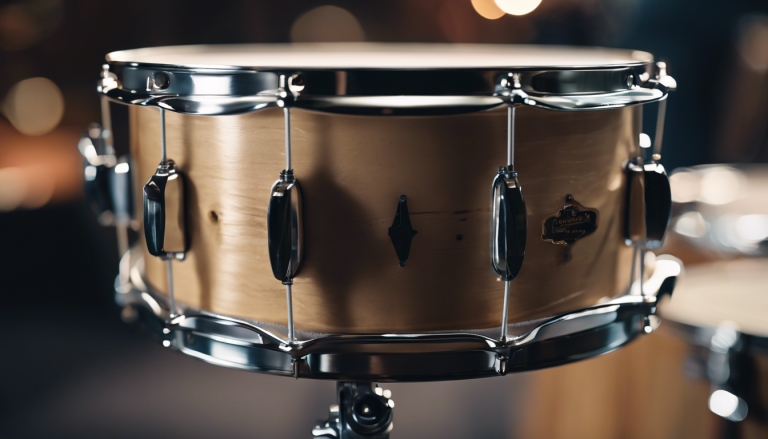
I take my own snare (Tama maple sunburst 5.5” x 14”) and cymbals (Ufip Class series 13” hats, Sabian 20” ride, sabian 16” medium crash) wherever I go.
Tob : I know more precisely your last album”102%”, the snare’s sound is particular, what is it? You like to tune your snare drum very high aren't you ?
Simon : I think I was using my Tama maple snare for that, but I’d have to check the photos to be certain. Yes, I like to crank it up, but not so much that it sounds like a piccolo. I’m aiming for the JB ‘crack’ sound.
Tob : Considering the music you play, do you like vintage drum or do you like any drum? Which one would you refuse to play?
Actually, vintage drums are often not sturdy enough for the NMS gig. I played a beautiful old Gretch kit in Colorado once, and it just fell apart during the gig. It was designed to be lightly tickled by a jazz player, I think. When we’re overseas, which is more often than not these days, I have to be prepared to play whatever I is provided. It’s just the sizes that are important to me, otherwise I find my inter-drum dynamics are all wrong for the first half of the gig while I get used to the difference.
Tob : What do you think about soloist drummers like Portnoy, Bozzio or Lang and their material’s profusion and technical virtuosity ? Your personal game philosophy based on groove effectiveness seems to be opposite to these drummers, no?
Simon : Correct – but maybe my playing philosophy is defined by my technical limitations!
I regard what those guys are doing as a whole different job, almost like a different instrument. It’s extremely impressive to watch, but it’s not music I enjoy listening to regularly.
Tob : What is your vision about an utopian, perfect drummer ? What characteristics does he need to have?
Simon : Patience, taste, attentiveness, passion, control, discipline, respect for the audience, good timekeeping, and a close personal relationship with the bass player.
Tob : What is the social situation of a professional musician in England? Is it difficult to be self sufficient in this country? Do you have some government or institution support ?
Simon : Not good. To be comfortable, either you have to be a member of a successful band, or at the top of the session game playing for pop bands, but it’s just a handful of musicians that get that work, and most of them have to live in London. Because of the Music College here, Leeds has a lot of really talented musicians, writers and producers who are still on the outside of the Industry struggling to pay the rent. There’s no institutional support, other than the general unemployment welfare system, which supported me for a few years when I was younger. Most musicians I know have another activity, sometimes musical, sometimes unrelated, which keeps them alive. Or a girlfriend with a proper job.
Tob : you belong to this group since the beginning. How did you meet Eddie and how did you create NMS?
Simon : In 1996 I lived with another musician called Dan Brown who was playing bass in a band with Eddie. Eddie was still searching for the right drummer for the project, and Dan proposed me. We had a little rehearsal in our basement and Eddie liked the un-technical way I played. I joined his band and it was re-named The Mastersounds. We wore suits and played at jazz clubs and bars in Leeds and Manchester.
Tob : How do you compose music, is Eddie create everything alone or everybody give some personal inputs? What is your role in particular?
Simon : Sometimes Eddie writes the whole tune in advance and teaches it to the rest of us, other times we jam our ideas, record the jam, and then Eddie arranges the results and we go back and re-record. My role is to find a way to articulate, and then fine-tune these ideas on the kit to make the grooves work in the best way. All too often we come up with some amazing spontaneous grooves on tour during soundchecks, but no-one records it, and by the time we get into the studio (months later) they are forgotten, and we can’t re-create them. My other role, as the manager of the band, is to encourage Eddie to write some tunes in the first place before we get into the studio.
Tob : How does Pete Shand the bass player works? For you, what is a good rhythmic section ? Even with a studio recording, we feel a strong complicity between you all.
Simon : Well, the studio recordings are all live takes anyway (all 4 of us playing at the same time) so your instinct is accurate! Pete and I have a lot in common, in that we are self-taught, and we play entirely by ear, although Pete is a much more advanced musician than I am. Pete and I have known each other and respected each other’s playing for nearly 15 years, plus we make each other laugh, which is important in any relationship!
Tob : How do recordings take place to be able to recreate the musical atmosphere? Do you record live or via computer screening ?
Simon : We record live, all in the same room, using acoustic screens to give the tracks a bit of separation. Because there’s always a bit of spillage, we have to be able to play a tune from start to finish without too many mistakes. After each take, usually one of us is not happy with some part of the performance, but Eddie makes the decision on what is usable. No take is ever perfect, but with NMS it’s the feel that’s more important.
Tob : Since NMS creation, did the line-up evolve a lot ? Rob Lavers (sax, flute) join you for « 102% », is it just a short collaboration or will he integrate the group? NMS doesn’t have a appointed singer, no? Is it a choice or don’t you find anybody reliable for this function?
Simon : The core of the band, since 1999 was me , Eddie, Pete and Bob Birch on Hammond). We had Cleve Freckleton as front-man for a couple of years, with the Haggis Horns, making it an 8-piece band (2000-2002) but there was very little room for improvisation in this line-up, as it’s difficult to communicate with so many people across a big stage. Bob left at the beginning of the year and now we have Joe Tatton on keyboards. Joe’s playing is different from Bob’s – his strength is more on piano than on Hammond, but we’re incorporating that into the sound a lot more than we used to. Rob Lavers has been with us on and off for about a year. It’s been interesting exploring new musical avenues with sax and flute, but we are going to concentrate on the core 4-piece again for a while, to get that rhythm section focus back. In 2005 – for ‘this is what we do’ we worked with percussionist Sam Bell, and took him our on a lot of the live gigs. It’s good for us to work with guest players, but the essence of NMS is bass, drums, guitar, organ – like the Meters.
As for vocals – we are aware that not having a singer limits where we can go as a band, but just because the public struggles to grasp instrumental music it would be wrong for NMS to become a mere backing band (unless it’s for Al Green!) We are available for hire as a super-soulful rhythm section, but the identity of NMS as a band is something different from that.
Joe can sing pretty well, and we sometimes play tunes like ‘Who’s Making Love’ where we all chant a bit. Plus we talk to the audience a bit, so they know we’re human !

Tob : When you played with a singer, how did you identify him? Do artists solicit you or do you look for them? Are the work and music setting up very different with a singer and instrumental only
Simon : Cleve came to see us play in Leeds when we had a weekly residency in the early years. He volunteered his services so we gave it a try. He’s an amazing front man. The gigs were very different – hardly any solos, just super-tight arrangements.
Tob : It's a joke for you : I read that a NMS concert can last 3 hours! What do you take? Coffee, alcohol, drogues ? (laugh !)
Simon : I don’t drink coffee, amphetamines make you speed up, and cocaine is no good for a 3-hour set – the effect wears off after 20 minutes and you can’t line it up on the floor tom due to the vibrations! ;-)
Seriously though, if we have a late-night set, Pete and I try to take a 2 hour nap after the soundcheck. That’s why we usually miss the support band. The longest we have played (so far) was 4 hours in San Francisco, but we had a 20 minute break in the middle and a few guests sat in, so it wasn’t too tough!
Tob : More seriously, how a NMS concert looks like, do you organize it with a strict timing or leave space for improvisation? Did you fail a concert and why?
Simon : Eddie writes the set lists according to the slot we have been given to play. The shorter the set, the stricter our timing needs to be. These days we regard anything less than 90 minutes as just a ‘teaser’ set – not too much jamming. Daytime festival slots are usually 60-75mins but no matter how many times we play them we usually have to knock 2 or 3 tunes off the set list because we run out of time.
Before we started playing in USA, our arrangements were always quite short - 3.5–5mins max - and there was not much variation in each tune from one gig to the next. We learned that audiences over there expect much more improvisation from a band like NMS. They are very tolerant when a jam doesn’t quite come together perfectly, but they are rewarded by the times when it all clicks magically into place when the band is in completely new territory. Now, if you look at our live sets, most of which are archived online, you see that most tunes are at least 8 minutes long! We’ve brought that spirit of improvisation back to Europe and we find that the audiences really enjoy it here too.
These days, an NMS concert only ‘fails’ for me if the audience is lacking – e.g. playing to 20 people in a theatre venue. That happens occasionally with inexperienced or foolish promoters. It’s hard for us to fully believe in the groove in that context, but we still do our best to entertain the people who are there. We play dance music.
Our best music is generated from the chemistry between us and a really energetic uninhibited crowd. Even if there are terrible technical problems – hideous on-stage sound, the wrong amplifiers, a broken drum kit – if the crowd is right the gig will work.
Tob : What is your best and your worst concert experiences?
Simon : Worst gig in recent memory was in Oldham in the North of England. It’s a grim place at the best of times. On this occasion the promoter was a big fan of NMS, and worked for the local council. He had access to council money, so the fee was good. The problem was that he was only funk fan in town. The venue was the kind of place where tattooed youths go every Saturday to listen to the hits of the 80s and 90s, get drunk and fight each other. During the gig there were about 15 people in the venue scowling at us from the edge of the room. As soon as we finished playing, the DJ put on the Happy Mondays or something, people came rushing in and the dancefloor filled up. We then had to load out all our gear in the rain and drive back to Leeds, thoroughly demoralised!
Tob : 102%” is the 5th NMS album, I’ve seen on internet that we can find some of your album (Thirty Three, Theses Is What We Do...) in vinyl, why did you choice to produce some of you albums in vinyl, for DJs?
Simon : Mainly for DJs and collectors, yes. We started off playing in funk clubs in between the DJ sets. They always worked from vinyl, and it was our first 7” single releases that brought us attention outside Leeds. So it’s part of our tradition to release vinyl.
Tob : The British music business is particular active for all soul funk music, while French is really poor even none existing, how do you explain this phenomena?
Simon : We may be witnessing a minor renaissance of soulful funky music in the mainstream, with the likes of Amy Winehouse et al… The last one was in the late 80s / early 90s with ‘Acid Jazz’ (JTQ, Corduroy, Brand New Heavies, etc…) But for the past 8 years there’s been dwindling interest in Britain for this kind of music. A lot of the promoters who have been trying to keep it alive have had to close their nights in recent years because the audiences simply aren’t there for it. University students in UK used to be more open-minded, willing to trying unfamiliar things, but it seems that everything now has to be uniform, and endorsed by television. I don’t want to be too negative: we have to go outside the UK to find our audience, but that’s great for us as we get to travel and make new friends all over the world!
Tob : NMS played already in France; do you have a good or bad memory of your experience? Do you think that NMS has a French public and soul funk music in general has a French public?
Simon : I hope so – we’re coming back in October for 2 weeks. I think funk promoters in France face similar difficulties to those in UK, but maybe it’s easier to sell a British or American band in France. – I don’t know. It will take a few more trips to build a loyal audience, just as it did in USA. The last run of gigs we did in France (apart from SPSJ) was a mixed experience – some audiences were better than others.
Tob : You made a USA tour in June and July, then a quick passage in Saint Paul trois Chateaux in France end of July before to return in your country in August, and after ? Can you tell us about the jazz soul funk festival in Saint Paul, where you were for two evenings the headliners ? Do you have any planed more important tour in France
Simon : SPSJ – it’s the second year for that festival. The two guys that run it – Fabrice and Stefan – also run Soul Cookers Records. They are big enthusiasts of the Hammond groove. The first night we played as NMS, the second night we did a tribute to James Brown. It was a lot of fun.
After that we went back to USA just for 3 gigs – we opened for The Headhunters in Chicago, and then went to Austin to play a festival with Stanton Moore, Karl Denson, Ivan Neville and loads of other amazing players and bands. When we got home we did a few UK gigs and then went to Menorca for a week. We played 3 gigs there – it’s our 4th consecutive year, and we are getting good audiences now on the island. And it’s nice to take a little break there too.
I’m at home now, working on the record label and the management side of things until we go to France on October 10th. I haven’t played drums for nearly 3 weeks and I’m missing it! Time to do some lonely practice, I think! (boo!)
Tob : What are the future projects for NMS ? And for you in particular?
I’m working with Eddie Roberts planning the next NMS album project – I can’t reveal any details yet, but we’re hoping to get that made between now and Christmas. Also fitting in trips to Germany and USA in November whilst planning the diary for 2008, which may involve a return to Japan.
For me, the next few months will be a balance of playing live, playing in the studio, and the boring administrative work which is essential to keep the first two going. Plus, I’ll be looking after my kids for much of the time. I’m planning to play a few gigs in Leeds with our Hammond player Joe Tatton - he has a vocal trio project. I did a recording session for Corinne Bailey Rae recently. I’d like to do more of that kind of work, as I like the challenge of learning new arrangements and the precision that pop music requires – it takes me back to my drumming roots!
Tob : if you have the opportunity to play with musicians that you could choose from every where in the world, what would be your dream team to play with ?
Simon : Well, I’ve played with quite a few amazing bass players on my travels with NMS but I’d still choose Pete every time, so he’s already in my dream team! Also, I’ve not yet found a horn section to beat the Haggis Horns, even though there are some great players around. I’d love to play with Lou Donaldson again – he has such a distinctive sound. Fred Wesley would be fun to have on the team.
Robert Walter (Greyboy Allstars, Headunters, Stanton Moore Trio) is an inspirational keyboard player. I’m lucky, that I get to see him play a lot in the States. I’d like to jam with Ben Folds. And some of the old Hammond guys – Reuben Wilson, Lonnie Smith.
Tob : If you have the opportunity to invite a person dead or alive, with whom would you like to drink?
Simon : Three people: Professor Richard Dawkins, Stephen Fry and Michael Palin. Oh, and if I’m allowed a dead person: Douglas Adams, please. Shit: they’re all Englishmen. What does that say about me?!
Dossier made by Prunel70 - October 2007
Translations : Sabine (a big big than you sabine ! ) and Cédric
Portrait : Superelien
If you want to write a comment about this interview, go there !